
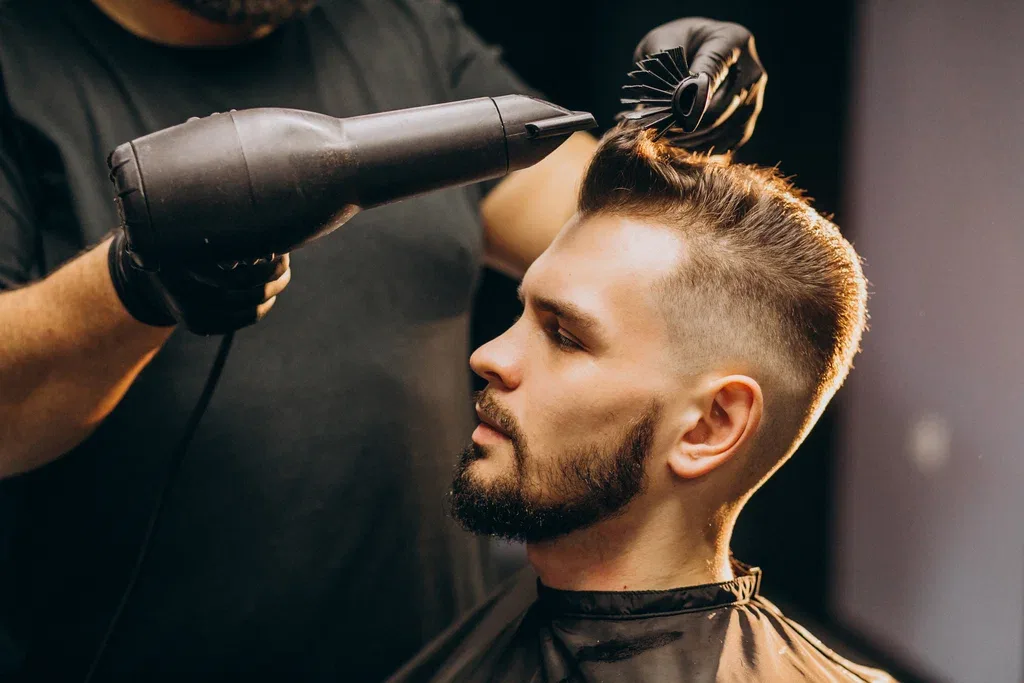
Boxing or tennis? These are the first things that come to mind when it comes to sports haircuts. But the options aren’t limited to those two. In this article, we’ll tell you how to get a haircut if sports are your life.
Boxing or tennis? These are the first things that come to mind when it comes to sports haircuts. But the options aren’t limited to those two. In this article, we’ll tell you how to get a haircut if sports are your life.
When it comes to sports haircuts, the first things that come to mind are boxing or tennis. However, the options aren’t limited to those two. In this article, we’ll introduce you to the 5 Men’s Haircuts Favorite by Athletes and tell you how to get a haircut if sports are your life.
When it comes to sports haircuts, the first things that come to mind are boxing or tennis. However, the options aren’t limited to those two. In this article, we’ll introduce you to the 5 Men’s Haircuts Favorite by Athletes and tell you how to get a haircut if sports are your life.
What should a sports haircut be? Perhaps the most important requirement is short hair. After all, during training and competitions, the last thing you want is to be distracted by your hair. And although famous football players have long had their hair cut however they like, we’re used to thinking of men’s sports haircuts as boxing or tennis. In fact, there are many more options, including hairstyles for long hair.
For those seeking inspiration, here are the 5 Men’s Haircuts Favorite by athletes that you might consider for your next haircut.
Quick links to our most-booked services
The English term “buzz cut” hasn’t caught on here. But if you tell your barber you want a buzz cut, they’ll understand right away. Yes, we’re talking about the same buzz cut with a 1, 3, or 6 mm cut. It’s often called a military cut, despite the fact that it’s a hairstyle, not a name. Of course, the buzz cut’s popularity skyrockets with the start of the next draft, and during self-isolation, it was practically the only available way to get in shape, but many athletes also wear the buzz cut in everyday life.
Typically, the length for this cut is trimmed with a single attachment. The hairstyle will look more interesting if you go to a barbershop and ask the stylist to create a fade—a smooth transition from the temples and back to the crown, which looks like a sprayed-on effect. To allow for a smooth transition, leave at least 6 millimeters of hair.
The buzz cut is a favorite among those who don’t like spending time on styling. A plus for athletes is that they can train without worrying about their hair getting in the way. However, please note that this haircut is best chosen by men with an ideal skull shape (or an uninhibited complex). Furthermore, it’s best to avoid a length of 1 or 3 mm during cold weather: sensitive scalps can react to temperature changes with dandruff.
The popularity of the tennis haircut coincided with the sport’s peak in the 1990s. Back then, tennis players were considered style icons. They wore simple hairstyles with short or no bangs, which allowed them to look well-groomed on the court and in everyday life. The classic tennis haircut features medium-length hair on top, gradually fading to the temples and back. This smooth transition distinguishes this cut from a crew cut or a semi-combed cut.
The tennis cut has three variations: the bob, the crew cut, and the youth tennis cut. For the bob, the crown is cut to a length of 2-2.5 centimeters. The hair on the temples and back is shaved almost completely.
The crew cut is a more casual style with short temples and back. The main hair is trimmed with thinning scissors to create a needle-like appearance. The acceptable hair length on the crown is 3-3.5 centimeters.
Youth tennis differs from classic tennis in that the crown length is up to 4-5 centimeters. This allows for experimentation with hairstyles.
Another haircut that originated in sports and has become a recognized classic. It has other names, but this is the one that has stuck. Legend has it that this haircut was worn by Canadian hockey players in the 1970s during games against the Soviet Union in Moscow.
The Canadian is a long haircut with a natural parting and bangs. It is characterized by volume at the forehead and crown. The sides and back of the head should be short, while the crown is left longer. The transition from short to long hair is smooth.
We’re sure even those who ardently oppose long hair on men will appreciate the man bun. It’s a classic man bun, pulled back at the crown or just above the nape. Long considered a Brooklyn bartender’s staple, it’s now embraced by a variety of professionals, including athletes.
The hardest part is growing your hair to the desired length. However, you won’t have to worry about styling it or going to the barber frequently: just wash your hair regularly, take extra care, and trim split ends at least every three months. The man bun also looks great on curly hair and pairs well with a beard trimming.
The top knot is a more youthful version of the man bun. It features shaved or short sides. You can part your hair or create a fade at the sides—don’t be afraid to experiment, like Real Madrid striker Gareth Bale does. These days, it’s hard to imagine him without a bun that transitions into a ponytail.
The footballer once sported a short haircut, but for about four years now, he’s been wearing his hair long. And it’s not just a desire to change his style: the Real Madrid star experienced early baldness.
And, of course, we can’t forget about the men’s haircut we mentioned at the beginning. Of course, it’s the boxing cut—a recognized classic of street style and sporty style. Often confused with the tennis cut, this cut is characterized by a contrasting transition from the crown to the back. The main body of hair should be no longer than 4 centimeters. The back is cut short, with the edging line starting at the highest point of the nape.
Quick links to our most-booked services
Keep reading