
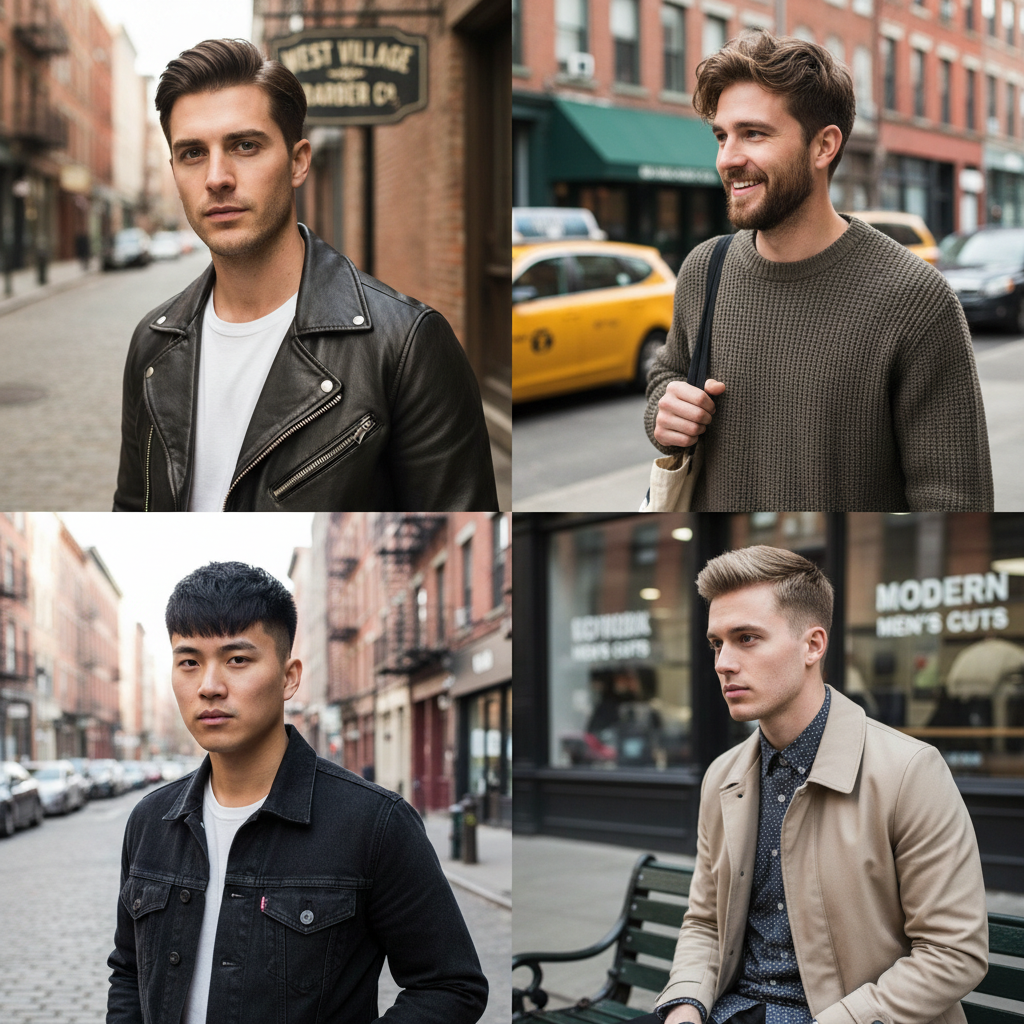
The French crop haircut has surged in popularity as a versatile, stylish option for men seeking a low-maintenance yet sharp look. Known for its textured top and short sides, this haircut combines classic European flair with modern sensibilities. Whether you’re aiming for an understated everyday style or an edgy modern men’s haircut in West Village, the French crop offers a refined choice that complements many face shapes and lifestyles. In this article, we’ll explore what the French crop haircut involves, its variations such as the French crop fade, and who can best wear this style. We’ll also touch on the importance of choosing the right barber for crop style and how the textured crop trends in NYC fashion circles reflect this timeless cut’s enduring appeal.
At its core, the French crop haircut is characterized by short sides and back paired with a slightly longer top. The top is cut to create texture, often styled forward to frame the forehead with bangs or a subtle fringe. This design emphasizes neatness and ease of styling, which explains its popularity among men of all ages seeking a manageable yet fashionable haircut.
The key features include:
This mix of simplicity and texture has helped the French crop maintain its status as a timeless men’s haircut, adaptable across decades and cultures.
The French crop fade is a contemporary evolution of the traditional crop, combining the textured top with a gradient fade down the sides and back. The fade can range from a skin fade, where the hair blends into the scalp, to a more gradual taper, delivering a clean, sharp outline to the style.
Adding a fade brings a modern edge and can dramatically change the look and feel of the haircut. It enhances the contrast between the top texture and the sides, highlighting the cut’s structure in a way that appeals to younger, fashion-conscious men.
Barbers specializing in this style often employ techniques that ensure the fade blends seamlessly while maintaining the distinctive length and texture on top. The French crop fade is especially popular in urban centers like NYC, where trends in textured cropping combine with classic fades to create looks that fit both professional and street styles.
New York City’s fast-paced lifestyle and diverse culture have influenced the rise of the textured crop—a style closely related to the French crop haircut—showcasing personalization and flair. In NYC, especially neighborhoods like the West Village, men’s haircuts tend to blend sophistication with creativity, and the textured crop embodies this balance perfectly.
In salons and barbershops across the city, the textured crop is celebrated for its adaptability. The hair is cut and styled to enhance natural hair patterns, making it ideal for men with thick, wavy, or curly hair. This approach allows for a look that’s casual yet intentionally styled, matching the city’s eclectic vibe.
Many men who opt for the textured crop appreciate its easy upkeep — it requires minimal daily styling but still delivers a polished appearance. This practicality makes it increasingly sought after by busy professionals and creatives alike.
When seeking a barber for crop style in the West Village or any metropolitan setting, expertise in textured cuts and fades is essential. The cropped cut demands precision to ensure the top layers complement the tapered sides and that the fringe length suits the client’s facial features.
Experienced barbers will tailor the cut to each individual, considering hair type, face shape, growth patterns, and lifestyle. A consultation before the haircut often helps in deciding whether a classic French crop or a more modern fade version will be the best fit.
Recommendations for finding the perfect barber include:
In my experience, the ideal barber balances technical skill with an understanding of contemporary trends, ensuring the cut not only suits your features but fits into your daily routine seamlessly.
The French crop is highly versatile and suits a wide array of face shapes, making it a reliable choice for many men. Its defining characteristic—the short, textured top with tapered sides—means it can be adjusted to frame the face in flattering ways. Here’s a breakdown of how this haircut aligns with face shapes:
| Face Shape | Suitability | Styling Tips |
|---|---|---|
| Oval | Highly suitable; oval shapes work well with almost all crop variations | Maintain natural texture, allowing the fringe to softly frame the forehead |
| Square | Great option; the crop softens strong jawlines with textured layers | Keep fringe slightly longer to soften angles and balance proportions |
| Round | Suitable if styled to add height; short sides help elongate face | Use volume and height on top to counteract roundness; avoid too much fringe |
| Heart | Works well; fringe can balance a wider forehead | Textured fringe and side fades soften sharp forehead features |
| Oblong | Needs careful styling; fringe helps reduce appearance of length | Keep fringe forward and avoid excessive height on top |
Hair type also plays a crucial role. Men with straight to slightly wavy hair often find the French crop holds well with minimal product, while those with curly or thicker hair can use the style to control volume and maintain structure, especially when done with expert layering.
Lifestyle is another factor. The French crop is ideal for men who want a fashionable haircut that requires little effort to maintain daily. Whether you are an on-the-go professional in the West Village or someone who appreciates low-fuss grooming, the crop can be adapted to fit your needs.
A significant advantage of the French crop is the simplicity of maintaining it between barber visits. Styling this haircut often involves just a few minutes each morning with minimal tools and products.
Common styling steps include:
The cut benefits from regular trims every 3-4 weeks, ensuring the sides maintain their clean appearance and the top layers retain their textured shape.
While the term “French crop” suggests continental origins, the style has evolved significantly over the past century. It traces back to military haircuts favored by soldiers in Europe—especially in France—where functionality and neatness were paramount. The short sides were practical, while the slightly longer top provided some personal styling freedom.
Over time, the crop became associated with French youth and the fashion came to symbolize a casual, effortlessly cool look. Hollywood and global fashion scenes later picked up on the style, cementing it as a staple in the men’s grooming world.
Today, the French crop is both a nod to classic heritage and a canvas for contemporary expression, visible across cities like NYC and trendy neighborhoods such as the West Village.
Take the example of Mark, a 28-year-old creative writer living in Manhattan. Mark wanted a haircut that felt modern but didn’t require excessive styling—something that worked both in casual coffee shops and client meetings. After consulting with a barber known for expertise in textured cuts and fades, he opted for a French crop fade.
The result was a sharp, confident look that complemented his angular jawline and thick, wavy hair. He found maintaining the cut straightforward, using a bit of styling cream in the morning and visiting the barber regularly. This style boosted his confidence and fit perfectly with his urban lifestyle.
The French crop haircut’s blend of history, style flexibility, and approachable maintenance might very well make it your next go-to look. Whether you prefer the classic style or a French crop fade, this haircut’s charm lies in its ability to adapt and flatter a variety of men’s faces and lifestyles while remaining effortlessly cool.
Keep reading