
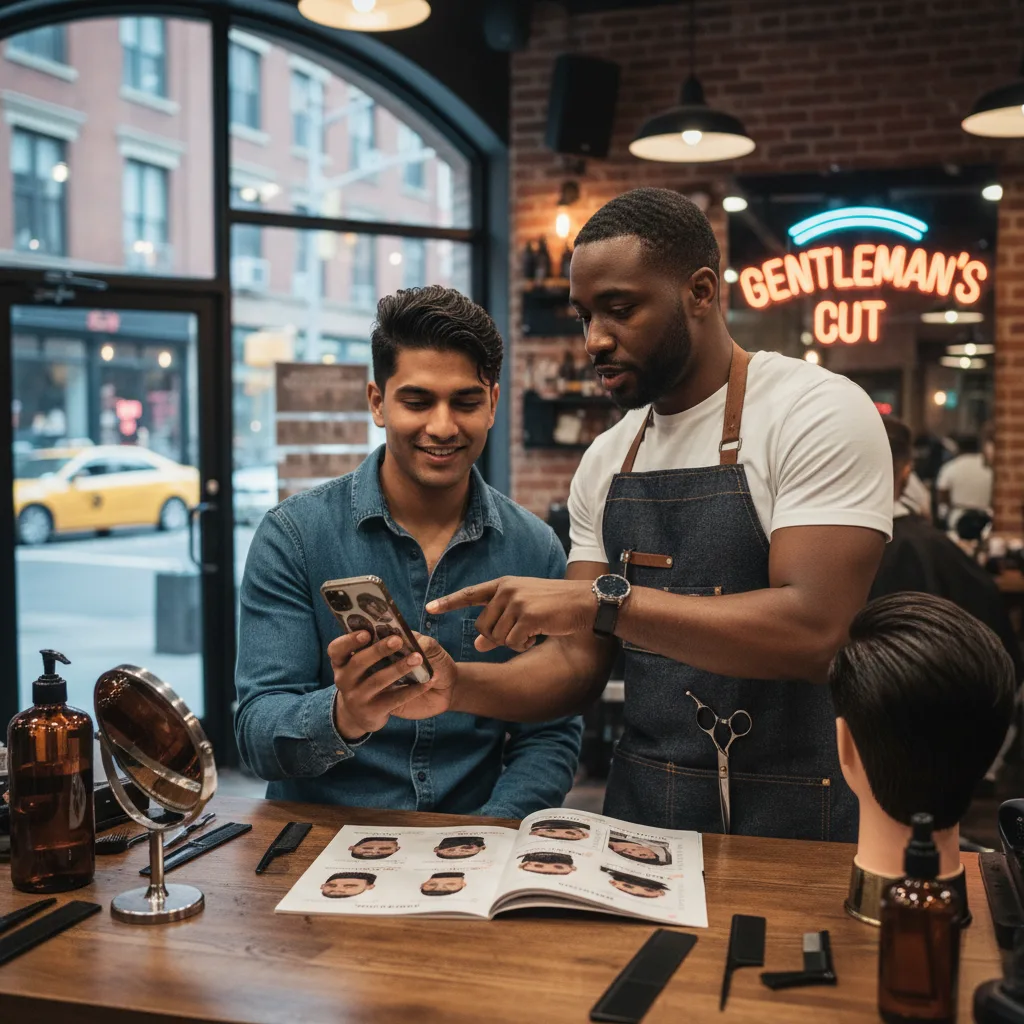
Every great haircut begins with clear communication. Whether you are visiting a new barber or sticking with your trusted stylist, knowing how to effectively express your needs can mean the difference between feeling confident with your look or regretting your visit until it grows out. For many, the challenge lies in bridging the gap between what they envision and what the barber understands. This comprehensive guide will walk you through how to tell your barber what you want, navigate barber terminology, describe haircut styles, and ensure you get the best barber consultation, especially in a competitive market like NYC.
Getting the perfect haircut is about more than just handing your barber a general idea. Haircuts are highly personal, and subtle changes can transform your entire appearance. Communicating effectively sets the foundation for a result that matches your expectations.
Many people assume barbers know exactly what they want without much explanation, but even experienced barbers rely heavily on detailed descriptions and dialogue. Poor communication can lead to mistakes such as cutting too much length, uneven fades, or styles that don’t complement your face shape or lifestyle.
Remember, your barber is a professional, but they can only work with the information you provide. Honest, clear discussions help save time, avoid frustration, and build a trusting relationship.
Knowing how to tell the barber what you want starts before you even sit in the chair. It’s essential to prepare by gathering a few key pieces of information:
When you arrive, start with a simple but clear statement about what you want. For example, “I’d like to try a classic tapered cut with a bit of length on top for styling flexibility.” Avoid vague phrases like “just a trim” or “make it look nice” if you want accuracy.
It is equally important to explain what you don’t want. Sharing dislikes, such as “Please don’t cut it shorter than two inches on the sides” or “I don’t want any harsh lines,” ensures your barber understands the boundaries clearly.
One of the best tools in haircut communication is visual aids. Bringing photos can be invaluable, especially if you have difficulty precisely describing a style. Pictures convey details about length, texture, parting, and fade types instantly.
Keep in mind, though, that what works on one person may not work on you due to differing hair texture or face shape. Use photos as a baseline rather than a strict template; discuss these with your barber to adjust the style suitably.
Barbers often use specific terminology when discussing haircuts. Knowing a few basics can drastically improve your haircut communication and help you feel more confident during your consultation.
| Term | Meaning |
|---|---|
| Fade | A blending technique where hair length gradually changes, typically shorter at the bottom and longer toward the top |
| Taper | A gradual decrease in hair length along the neckline or sides without completely shaving it down |
| Clipper guard | An attachment on clippers indicating specific hair length during cuts (e.g., #1 guard = 1/8 inch) |
| Texturizing | Cutting technique to reduce bulk and add movement or layers |
| Line-up (or shape-up) | Sharp outline around hairline and temples |
Don’t hesitate to ask your barber to explain any terminology you don’t understand. Most professionals are happy to educate their clients to ensure mutual understanding.
When discussing length, mentioning clipper guard numbers can make requests clearer. For example, asking for a “#2 on the sides” means you want hair cut to roughly 1/4 inch. Combining this with your description of the fade or taper helps your barber execute an exact look.
It’s a good idea to learn a few common guard lengths so you can specify rather than guess. If you’re unsure, asking your barber for recommendations based on your face shape and hair type is always smart.
Describing your desired haircut style is an art in itself. Vague descriptions such as “short on the sides” or “long on top” are often too broad. Instead, offering detailed, precise information helps your barber understand exactly what you envision.
Here are some tips on effectively describing popular haircut aspects:
If you’re exploring a new style, discussing how the cut will fit your lifestyle matters. Explain your typical hair routine, whether you like to use styling products, or prefer a low-maintenance look for busy days.
Here are some model phrases that can guide your conversation:
Remember, clarity is key, and practice will make this communication easier over time.
New York City is home to thousands of barbershops, boasting some of the best barber consultations available. The competitive environment means many barbers offer personalized service and in-depth consultations to stand out.
To take advantage of the best barber consultation NYC has to offer, prepare before your visit:
During the consultation, pay close attention to the barber’s suggestions. A skilled professional can adapt your ideas to your hair type, face shape, and lifestyle — sometimes proposing modifications to enhance the final result.
The best consultations feel like conversations rather than transactional exchanges, where mutual respect and understanding create a comfortable atmosphere. It’s also an opportunity to establish long-term rapport, essential for consistent, great haircuts.
Once you find a barber in NYC who listens attentively and delivers results you love, keep the communication open. Share your honest feedback post-haircut, and be willing to discuss changes over time as your style evolves.
Building this relationship ensures your barber becomes familiar with your preferences and can tailor future cuts with increasing precision, saving you time and guesswork.
Even with the best intentions, miscommunication can occur. Here are common pitfalls to watch for and how to avoid them:
Clear and respectful dialogue is a two-way street. Barbers want to hear what you want just as much as you want them to deliver it.
As someone who struggled for years to convey haircut preferences, I learned firsthand the power of detailed communication. Early on, I used vague phrases like “just a bit shorter,” which often led to disappointing results or awkward stages of regrowth.
Once I adopted a more proactive approach, bringing photos and learning simple terminology like “fade,” “taper,” and clipper guard numbers, my visits changed substantially. I recall one barber in NYC who took the time to discuss my daily hair routine and facial features at length before recommending a textured crop that suited me perfectly.
This experience highlighted that the haircut isn’t just about aesthetics but functionality and confidence. By investing time in communication, my style became more manageable, flattering, and reflective of who I am.
Consistency is key to maintaining great haircuts. Here are some final tips that can help sustain effective communication with your barber over time:
By approaching each visit as a collaborative effort, you and your barber create a shared vision that leads to consistently perfect haircuts.
Keep reading