
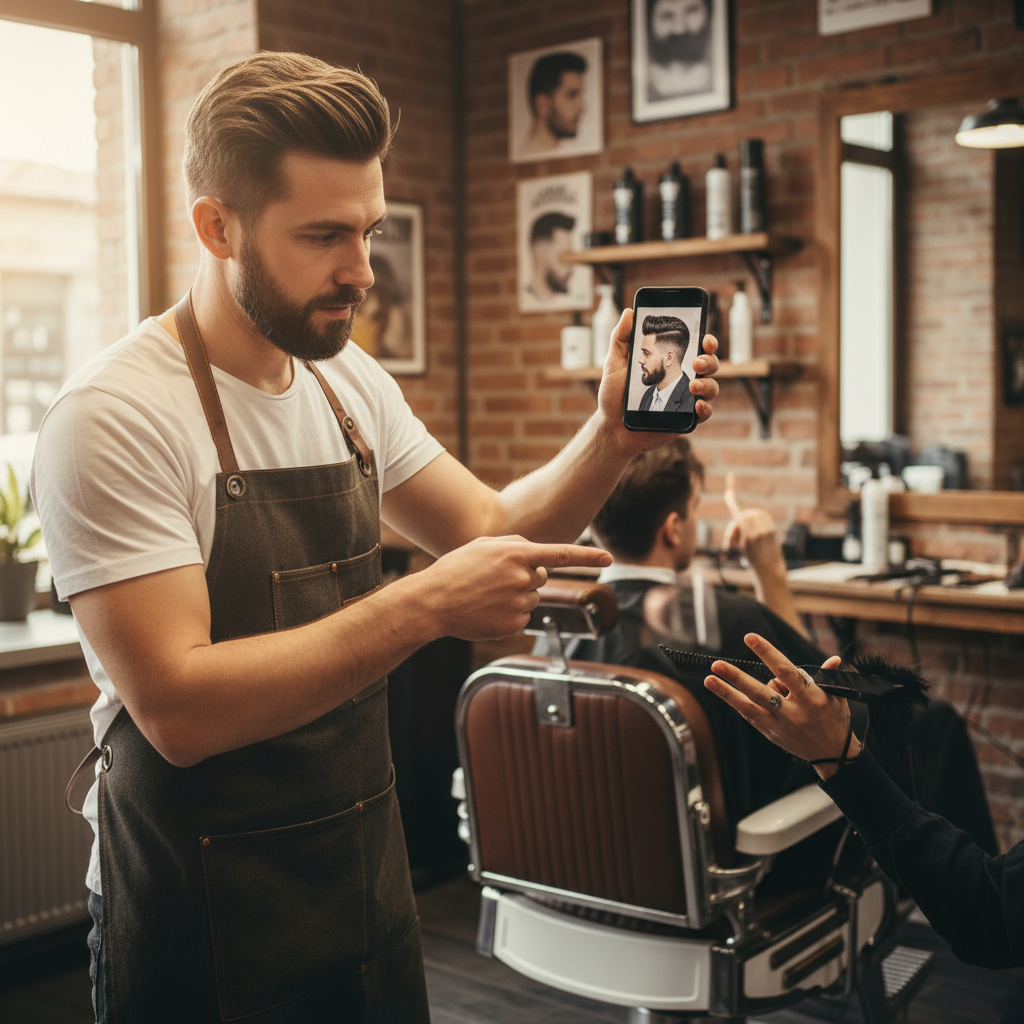
Getting the perfect haircut isn’t just about sitting back and trusting the scissors; it’s about clear communication with your barber. Whether you’re aiming for a subtle trim or a bold new look, how you express your desires can make all the difference. This article will serve as your ultimate haircut communication guide, helping you understand key barber terminology, learn how to tell your barber what you want, and confidently describe your preferred haircut style. If you’re in a bustling city like New York, where the best barber consultation NYC offers can be both exciting and overwhelming, this guide will help you approach your appointment prepared and informed.
Have you ever left a barber shop feeling like your haircut wasn’t quite what you envisioned? You’re not alone. Many people struggle with articulating their preferences, which often results in disappointment. Barbers are skilled professionals, but they need your input to tailor the cut perfectly to your head shape, hair texture, and personal style.
Effective communication builds trust and creates a partnership where both you and your barber work towards the best outcome. This ensures you walk out feeling confident and satisfied. Without clear instructions, even the best barber might misinterpret your wishes, so knowing how to convey your ideas is vital.
Preparation starts before you step into the chair. Consider these steps to get ready for an efficient and productive consultation:
These preparatory steps form the backbone of a smooth haircut experience. The more informed you are, the easier it is to guide your barber.
Expressing exactly what you want might seem daunting, but it doesn’t have to be complicated. Here are some practical tips to help you communicate effectively:
Communicating in this precise way avoids misunderstandings. In my own experience, once I learned to use clipper guard numbers clearly, my visits became far more satisfying.
Familiarizing yourself with common barber terms can greatly enhance your communication. Here’s a brief glossary of terms you might hear or want to use:
| Term | Description |
|---|---|
| Fade | A haircut that gradually transitions from short hair near the neckline to longer hair on the top. |
| Taper | Similar to a fade but usually less drastic, with hair gradually shortening near the edges. |
| Undercut | Hair on the sides and back is cut very short or shaved, with longer hair left on top. |
| Clipper guard | A numbered attachment that adjusts the length of cut hair when using clippers. |
| Texturizing | Cutting technique that removes bulk and adds movement by creating layers or points in the hair. |
| Line-up or shape-up | The outlining of hair along the forehead, temples, and neckline for a clean, defined edge. |
Using these terms confidently during your consultation can enhance mutual understanding and lead to the precise style you crave.
Sometimes naming a style (like “buzz cut” or “pompadour”) isn’t enough, especially if you have unique preferences. Here’s how to add depth to your description:
Here’s a sample explanation you might give to your barber: “I’d like a low fade on the sides with about a 1 guard, keep the top around two inches but layered for texture. I usually style with a matte product for a natural look, and can you clean up the hairline, but keep it looking natural?”
This level of detail ensures you and your barber are on the same page.
In a dynamic city like New York, where the best barber consultation NYC salons are known for combining artistry with precision, the consultation process stands out as a decisive factor in achieving a perfect haircut.
A quality consultation includes a detailed discussion about your lifestyle, hair history, and expectations. Skilled barbers might even analyze your hair growth patterns and facial structure to recommend flattering styles. They’ll ask about your daily hair care routine and preferred maintenance level.
During a top-notch consultation, you get a chance to ask questions or request adjustments. The best barbers view consultations as collaborative conversations rather than one-sided instructions. This approach ensures your haircut suits not only your style goals but also your schedule and hair type.
From my visits to some of NYC’s leading barber shops, the difference that a thoughtful consultation makes cannot be overstated. It transforms a haircut from a routine service into a personalized makeover that fits seamlessly into your life.
Beyond words and explanations, there are a few extra pointers to maximize your haircut success:
Taking a proactive role in your haircut ensures you feel empowered rather than passive during the process.
Getting your perfect haircut is sometimes a journey. You might need to experiment with different barbers and styles before finding the one that suits you best. Don’t be afraid to take calculated risks based on professional advice.
Remember, communication is two-way. A skilled barber will guide the conversation, ask clarifying questions, and adapt based on your feedback. Your role is to be clear, open, and honest about your preferences and concerns.
Next time you sit in that barber chair, approach the conversation well informed and confident. Whether you’re scheduling the best barber consultation NYC has to offer or visiting your local shop, effective communication is the key to walking away with a haircut you truly love.
Keep reading