
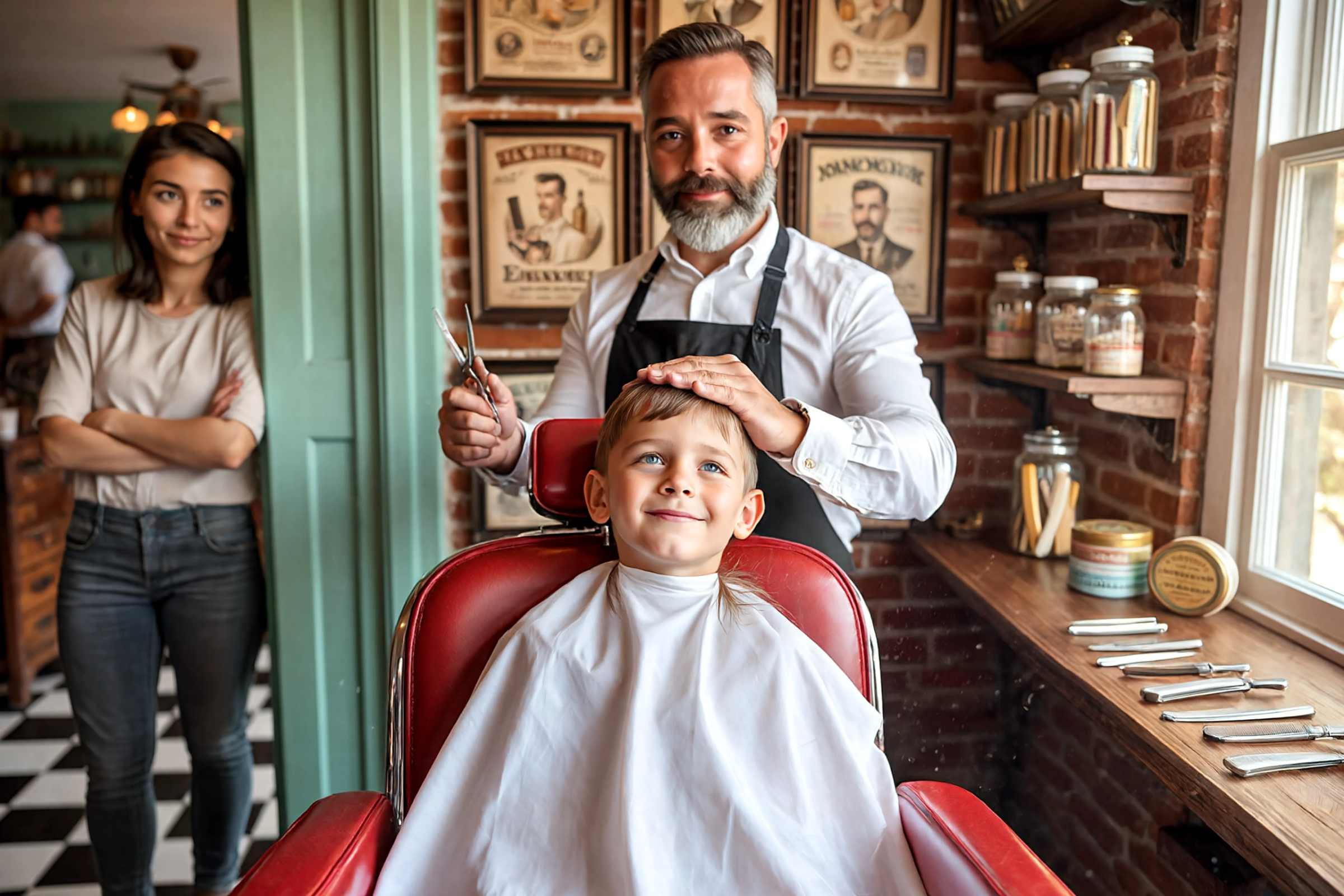
Kids Haircut appointments at Village Cuts look different from typical adult services, and that’s exactly the point. We’ve learned that successful children’s haircuts require patience, flexibility, and an understanding that every child responds differently to the barber chair. Some kids hop right up and sit perfectly still. Others need distraction, frequent breaks, or a parent’s lap for security. Our barbers adapt to each child’s needs rather than forcing a one-size-fits-all approach.
Parents throughout Manhattan bring their children to us because we’ve created an environment where kids feel comfortable, not intimidated. There’s no rushing, no frustration, and no judgment if a haircut takes longer than expected or needs to happen in stages.
A child’s first haircut is a milestone worth celebrating. We get it—you want photos, you want your little one to cooperate, and you definitely don’t want tears. Our approach starts before the scissors come out. We let children touch the tools, feel the cape, and watch other haircuts in progress if that helps build comfort.
For toddlers, sometimes the best strategy is working quickly while they’re distracted by a phone video or snack. We’ve done plenty of haircuts with kids munching crackers or watching cartoons. Whatever works, works. The goal is a decent trim and a positive association with the barbershop.
We don’t force kids into the chair if they’re having a rough day. If your child is overwhelmed, we can attempt a quick trim with them standing or sitting on your lap. Many parents are surprised by how well this works. The formal barber chair can wait until next visit when they’re more comfortable.
Kids’ hair changes texture and growth patterns as they age, so styles that work at three might not suit a seven-year-old. For toddlers, we typically recommend simple, low-maintenance cuts that parents can easily manage between visits. Basic trims around the ears, neckline cleanup, and light layering keep things neat without requiring daily styling.
School-age children often have opinions about their hair. We involve them in the conversation, showing options and explaining what different lengths look like. Some kids want to copy a friend’s style or celebrity look. We’ll assess whether their hair texture can achieve that result and suggest modifications if needed.
Teenage boys bridge the gap between children’s cuts and adult styling. They’re usually ready for fades, undercuts, and more complex cuts that require some home maintenance. We teach them basic styling techniques and recommend age-appropriate products that won’t damage young hair.
Movement is normal and expected during children’s haircuts. Our barbers are skilled at working around squirms, anticipating sudden head turns, and pausing when necessary. We use guards on clippers when appropriate to prevent any mishaps if a child moves unexpectedly.
Timing matters with young children. Late afternoon when they’re tired and cranky? Probably not ideal. Mid-morning after breakfast when energy is good but they’re not yet overstimulated? Much better odds of success. We’re flexible with scheduling to help you choose optimal timing.
Siblings can be helpful or distracting depending on their dynamic. Sometimes watching an older brother get his hair cut first builds a younger sibling’s confidence. Other times, having both kids in the shop simultaneously creates chaos. You know your children best, and we trust your judgment on whether to bring them together or separately.
Some children have sensory sensitivities that make haircuts genuinely difficult. The sound of clippers, feeling of hair falling on skin, or tightness of the cape can be overwhelming. We’ve worked with many families navigating these challenges and have learned adaptive strategies.
Scissors-only cuts eliminate clipper noise. We can skip the cape if that’s triggering, using towels instead to catch hair. Taking breaks whenever needed—even if it means a fifteen-minute haircut stretches to thirty—is completely acceptable. We’ve never rushed a child who needs extra time and patience.
Parents often know their child’s triggers and calming techniques. Share this information with us. If a specific toy, video, or conversation topic helps your child stay regulated, we’ll incorporate it into the haircut process.
Come prepared with entertainment options. Phone videos, small toys, or snacks can make the difference between cooperation and meltdown. We don’t mind mess—focus on keeping your child calm and comfortable.
Set realistic expectations before arriving. Tell your child where you’re going and what will happen in age-appropriate language. For very young children, picture books about haircuts can help build familiarity. Avoid building up the haircut as a scary or major event—treat it casually.
Schedule appointments when your child is well-rested and fed. A tired, hungry kid is unlikely to sit patiently regardless of the barber’s skill. Mid-morning or early afternoon typically works better than late day when everyone’s energy is depleted.
Children’s hair grows at varying rates, but most benefit from cuts every six to eight weeks. Keeping a regular schedule prevents hair from becoming unmanageable and makes each appointment quicker since we’re maintaining a style rather than starting over.
Between visits, parents can handle minor touch-ups around ears and neckline if needed. We’re happy to show you safe trimming techniques using scissors or clippers. However, major cutting is best left to professionals—home haircut disasters are harder to fix than letting hair grow slightly longer.
Many of our adult clients started coming here as children. There’s something special about being your barber from first haircut through high school graduation and beyond. We watch kids grow up, their styles evolving alongside their personalities.
Consistency matters with children. Seeing the same barber who remembers them and their preferences builds trust and comfort. We make notes about each child’s needs, successes, and challenges so every visit builds on the previous one.
Village Cuts welcomes families from throughout Manhattan including the West Village, East Village, SoHo, Chelsea, and Lower Manhattan neighborhoods. Walk-ins are accepted, though scheduling ensures we have adequate time for your child’s appointment without rushing.
Keep reading