
In the bustling world of men’s grooming, understanding the nuances of haircut techniques can elevate your style and boost confidence. Among the variety of barber cutting techniques exists a fundamental distinction that every man should recognize—the difference between a scissor cut and a clipper cut. Whether you’re aiming for a timeless, classic look or a modern, edgy fade, knowing how these approaches work can help you communicate better with your barber and ensure you walk out of the chair with exactly the hairstyle you envision.
From the precision cuts found at the most respected salons to the sharp clipper fades trending across Manhattan neighborhoods like the West Village, each method has its own charm, advantages, and ideal applications. This article delves deep into the intricacies of these haircut styles, breaking down the tools, techniques, and styles associated with scissor cuts versus clipper cuts. We’ll also explore top-notch places such as Precision Cut NYC, where barbers combine artistry and technique for impeccable results.
The foundation of any men’s haircut lies in the tools and methods used by barbers. While scissors and clippers are both staples in barber shops, they deliver vastly different results. At its core, a scissor cut involves manual, precise trimming using shears that allow for controlled, layered shaping. Clippers, on the other hand, are motorized devices with adjustable guards designed for speed and uniformity, producing cleaner lines and fades.
In a practical barbering scenario, these two tools serve somewhat contrasting purposes. Using scissors lets the barber work hair by hair or in small sections, sculpting textured, refined shapes. Clippers excel in removing bulk quickly, creating sharp transitions, and ensuring tight, sleek hairstyles. This fundamental variance shapes the look, feel, and customization level available to each customer.
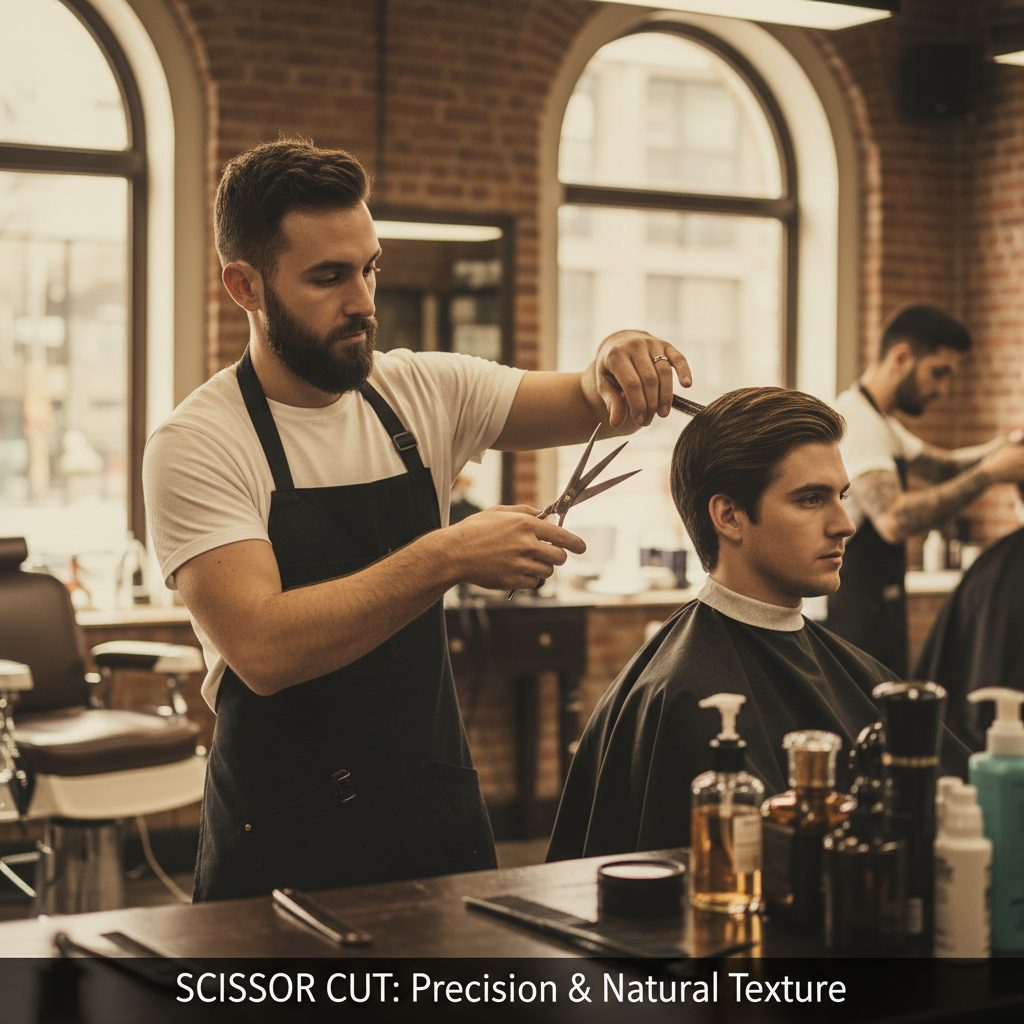
Scissor cuts are often synonymous with a high level of craftsmanship. Barbers who specialize in scissor cutting use techniques that range from point cutting to slide cutting, tailoring each snip to the client’s hair texture and desired style. This technique allows for natural movement in the hair and can accommodate varied lengths and shapes.
For instance, a layered cut to add volume or soften thick hair is most effectively done with scissors. The barber can meticulously thin out or texturize the hair, giving a finished look that is soft, dynamic, and suited for styles ranging from modern quiffs to classic pompadours. Personal experience shows that clients seeking a natural finish and versatile hair texture tend to favor scissor cuts.
Clipper cuts have revolutionized the way short hairstyles are shaped, bringing speed and precision to the forefront. Clippers equipped with various guard sizes allow barbers to execute everything from military-style buzz cuts to complex fades with effortless ease. One of the most popular examples is the clipper fade West Village stylists have perfected—an artful blending of hair lengths using progressive clipper guards and blending shears.
These cuts are favored for their clean, polished appearance and low maintenance. For clients who want sharp edges and clear lines around the hairline and neckline, clipper cuts provide a flawless finish unattainable with scissors alone. Additionally, clipper cuts are practical for those with thick or curly hair, facilitating easier management.
Understanding the fundamental difference between scissors and clippers is only the first step. Exceptional barbers employ a combination of these tools and techniques customized to each client’s preferences, hair texture, and lifestyle demands. Whether the goal is a precision cut in NYC’s fashion-forward salons or a rugged, masculine look, the barber must assess various factors.
Hair texture profoundly influences whether a scissor cut or a clipper cut is the best fit. Fine, straight hair responds well to scissor techniques because the controlled layering enhances natural movement and volume. Curly or coarse hair, frequently better suited for clipper maintenance, benefits from the uniform cuts provided by guard-based clipper work, which helps avoid unnecessary bulk and keeps the style manageable.
Barber shops in Manhattan, especially those offering services like Precision Cut NYC, often perform consultations that include texture analysis before proceeding. This personalized approach ensures the haircut method complements natural growth patterns, hair density, and curl types.
When aiming for a classic, polished appearance, a scissor cut delivers unmatched elegance. Styles like the side part, gentleman’s cut, or layered top often use scissors to ensure clean lines combined with texture and depth. Conversely, the clipper cut shines in sportier, more contemporary styles such as the high fade, undercut, or skin fade—hallmarks of places known for clipper fade West Village specialists.
The versatility arises when barbers combine scissor cuts on top with clipper work on the sides and back, blending traditional methods with modern trends. This hybrid technique produces sharp contrasts and clean lines teaming with stylish texture on top.
Precision Cut NYC exemplifies how skilled barbers elevate men’s haircut methods by mastering both scissors and clippers. Their approach highlights the importance of blending techniques tailored to each client’s anatomy and style objectives. With years of experience and ongoing education, their barbers perfect these essential skills every day.
During my visits to Precision Cut NYC, I observed personalized consultations where the barber assessed my hair type and discussed my desired style before deciding whether to focus on scissor cuts, clipper techniques, or a combination. The result was a haircut that felt crafted just for me—clear evidence that no single tool fits all, but expert use of both can transform any look.
At an upscale barbershop famed for precision cuts, the process often begins with detailed styling discussions, hair inspection, and sometimes even scalp treatments. Next, barbers carefully choose the right tools. Those focusing on texture and top styling often select their finest stainless steel scissors, employing various cutting angles to create depth.
When clipping fades, they use clippers with several guards to define clean edges, build smooth gradients, and remove bulk effectively. This dual method requires not just good tools but the artisanal touch of a barber skilled in multiple men’s haircut methods.
Few trends embody modern barbering artistry like the clipper fade West Village style. This haircut is characterized by closely shaved sides graduating seamlessly into longer hair on top, often combined with edgy shapes or hard part lines. The skill involved lies in blending various clipper guard lengths flawlessly.
The clipper fade has risen to prominence due to its clean look and adaptability across professional and casual settings. Barbers in neighborhoods like West Village have honed their expertise, employing rapid clipper passes for the gradation and finishing touches with trimmers for sharp edges.
Mastering these steps requires patience and practice, which is why barbers in West Village often undergo extensive training before offering this popular service.
Choosing between a scissor cut and clipper cut can sometimes be challenging without professional advice. Here are some essential considerations to guide your decision:
| Consideration | Scissor cut | Clipper cut |
|---|---|---|
| Hair length | Better for medium to longer lengths | Ideal for short to very short hair |
| Texture control | Offers more textured, layered looks | Provides uniform, clean surfaces |
| Maintenance | May require more styling effort daily | Usually low maintenance and easy to manage |
| Styling options | More versatile for diverse styles | Best suited for fades and buzz cuts |
| Time taken | Generally longer appointments | Faster, efficient cutting |
During your next barber appointment, feel free to ask for recommendations based on this framework. Skilled barbers appreciate clients who show knowledge, making the collaborative haircutting experience more rewarding.
The world of men’s grooming is constantly evolving, yet the core distinction between scissor cuts and clipper cuts remains central to any haircut conversation. Both methods bring unique advantages and cater to different aesthetic desires, lifestyles, and hair types.
Great barbers understand the power of mastering multiple barber cutting techniques. They skillfully combine the precision and texture control of scissors with the efficiency and sharpness of clippers to create looks that fit personal style goals perfectly—whether that’s a meticulously crafted layered crop or a bold clipper fade reminiscent of West Village trends.
Whether you find yourself seated in an upscale NYC salon or a neighborhood barbershop, recognizing this difference helps you collaborate with your barber more effectively. It also empowers you to choose styles that highlight your personality while respecting your hair’s natural qualities.
Ultimately, the difference between a scissor cut and a clipper cut isn’t just about tools—it’s about the approach, vision, and skill behind every haircut that shapes how you present yourself to the world.
Keep reading