
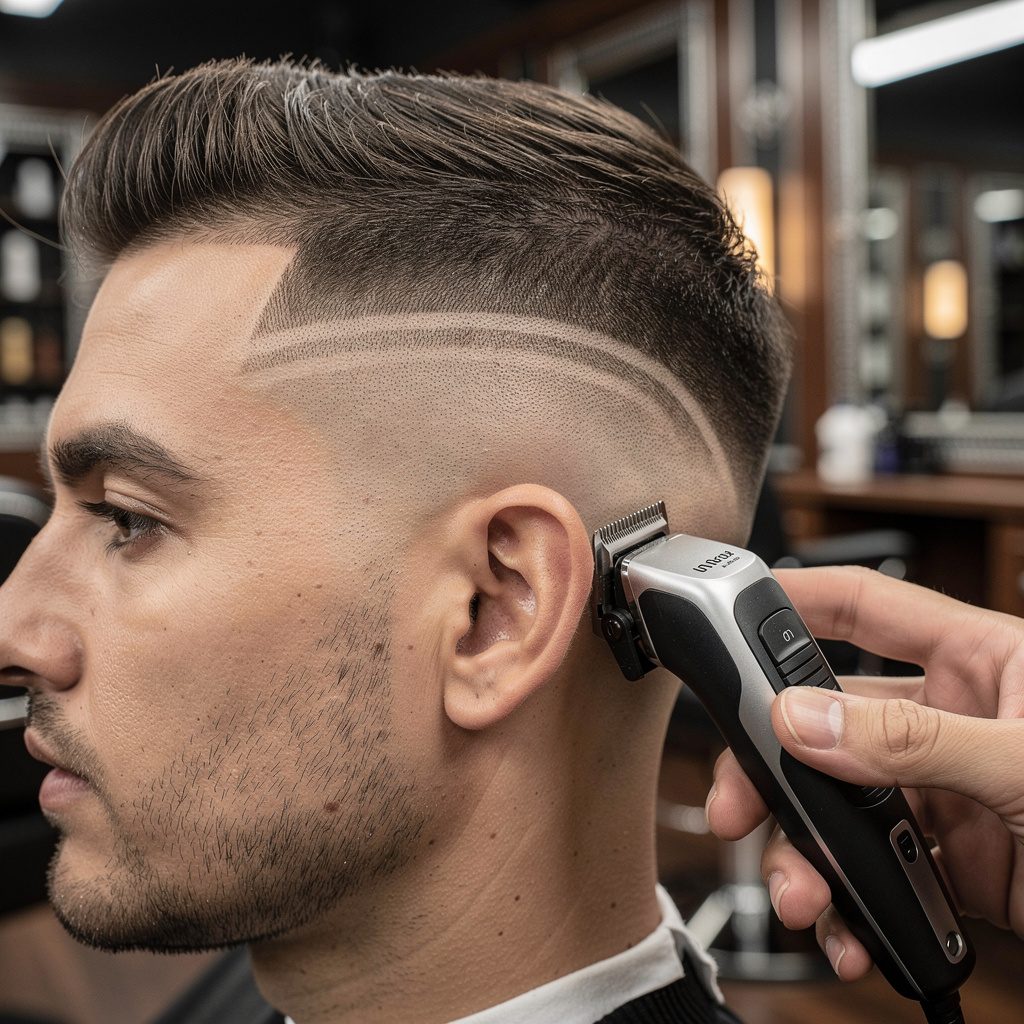
Taper Fade precision separates amateur cuts from professional results. At Village Cuts in Manhattan, our barbers execute seamless transitions from longer hair on top to progressively shorter sides and back, creating gradients so smooth they appear airbrushed rather than cut. Whether you prefer low, mid, or high tapers, this versatile technique adapts to various styles while maintaining clean, contemporary aesthetics that work across professional and casual environments.
The taper fade’s appeal lies in its graduated blending that eliminates harsh lines. Unlike blunt cuts or basic trims, properly executed tapers create dimensional depth that enhances head shape while providing structure that makes daily styling simpler and more predictable.
Low tapers begin the fade just above the ears, maintaining more length on sides for conservative, professional appearance. This version suits workplace environments with stricter grooming standards while still providing modern edge. The gradual transition starts lower on the head, preserving fuller coverage.
Mid tapers initiate blending around temple level, offering the most versatile balance between dramatic and subtle. This height works across face shapes and style preferences, providing enough contrast to look intentional without appearing extreme. Most clients find mid tapers hit the sweet spot.
High tapers start the gradient well above temples, creating bold contrast between long top sections and very short sides. This aggressive approach makes strong style statements and suits creative industries or personal brands that embrace distinctive aesthetics. Requires confidence to pull off successfully.
Temple fades focus transition specifically around temple areas, creating focused detail work while keeping other sections more uniform. This technique adds dimension without committing to full head fades and works well for guys wanting subtle refinement.
Creating flawless tapers requires multiple guard lengths and constant blending. We start with clippers to remove bulk and establish general shape, then begin the detailed gradation work using progressively shorter guards with overlapping passes that eliminate visible lines.
The secret to seamless tapers is the overlap technique. Each clipper pass slightly overlaps the previous section, creating imperceptible transitions rather than distinct bands of length. This process can’t be rushed—quality tapers demand patience and continuous evaluation from multiple angles.
We constantly step back to assess symmetry and smoothness during cutting. Tapers must match perfectly on both sides while following each head’s unique contours. Minor adjustments throughout the process ensure final results meet our standards before we consider the cut complete.
Finishing work uses trimmers and razors to create crisp edges around hairlines and necklines. These details transform good tapers into exceptional ones, providing sharp contrast at boundaries while maintaining the soft gradation throughout blended areas.
Tapers provide versatile foundations that complement numerous top styles. Textured crops paired with mid tapers create modern, low-maintenance looks perfect for active lifestyles. The taper handles side management while textured tops provide styling interest without requiring excessive product or time.
Pompadours combined with tapers—especially high tapers or temple fades—deliver dramatic vintage-modern fusion. The height and volume on top gain emphasis from shorter, faded sides. This combination makes bold statements while remaining groomable for daily wear.
Even simple buzz cuts benefit from tapered sides rather than uniform length. Adding subtle fade creates dimension and interest that straight-across cutting can’t achieve. The taper elevates basic cuts into polished styles.
Longer professional styles work excellently with low or mid tapers. The fade provides structure and reduces bulk on sides while allowing length on top for various styling options. This combination suits business environments requiring polish without sacrificing contemporary appeal.
Round faces benefit from tapers that maintain some length on sides rather than going extremely short. Low to mid tapers work better than high fades, avoiding additional width that round faces don’t need. The gradation should emphasize vertical rather than horizontal lines.
Square jaws handle any taper height confidently since strong bone structure provides natural balance. High fades, mid tapers, or low gradations all work—the choice becomes more about personal preference and style goals than facial structure requirements.
Long faces should approach high tapers carefully as they can elongate proportions further. Low tapers or mid fades that maintain side coverage typically flatter long facial structures better, adding width perception that balances length.
Oval faces are taper-optimal, working with virtually any fade height or style combination. This balanced proportion adapts well to various interpretations, giving oval-faced clients significant creative freedom in choosing taper variations.
Tapers require more frequent maintenance than blunt cuts. Most clients return every two to three weeks to preserve fade sharpness. Hair grows approximately half an inch monthly, so the transition zone gradually moves upward. Some embrace the slightly grown-out look while others want perpetual crispness.
Between appointments, you can extend fade life with basic touch-ups around ears and neckline. We’re happy to teach safe clipper techniques for home maintenance, though professional blending work can’t be replicated with consumer equipment and limited experience.
The taper’s structured sides make daily styling simpler. You’re working with less hair volume on sides, so products go further and styling requires less time. Many guys find this tradeoff worthwhile despite more frequent barbershop visits.
If you decide to grow out a tapered cut, the process involves some awkward phases as shorter sides catch up to longer tops. We can manage this transition with strategic trimming that gradually evens out length differences while maintaining presentable appearance throughout growth.
Some clients alternate between tapered and non-tapered styles seasonally. Summer fades provide cooling and easy maintenance, while winter growth offers warmth and different styling options. We accommodate these cyclical preferences without judgment.
Many people use “taper” and “fade” interchangeably, and the distinction is subtle. Tapers traditionally refer to gradual length reduction that doesn’t necessarily go down to skin. Fades specifically describe transitions that blend to bare skin or nearly bare.
In practice, most modern “tapers” incorporate fade elements, especially around hairlines. We use whichever terminology you’re comfortable with and focus on delivering the gradation style you’re actually envisioning rather than getting hung up on semantic differences.
Our barbers specialize in precision blending techniques that tapers demand. We’ve invested in professional equipment, multiple guard sets, and ongoing education to stay current with evolving taper and fade methods.
Every taper begins with consultation about your preferences, face shape, and hair characteristics. We assess realistic outcomes based on your hair texture and growth patterns, ensuring expectations align with achievable results.
Located in Manhattan’s West Village, we serve clients throughout Lower Manhattan including SoHo, Chelsea, Greenwich Village, NoHo, and the East Village. Walk-ins are welcome though appointments guarantee minimal wait times and your preferred barber availability.
Experience Manhattan’s finest taper fades at Village Cuts where technical skill meets artistic vision. Our barbers don’t just cut hair—we craft gradations that enhance your natural features while fitting your lifestyle. Schedule your appointment today.
Keep reading